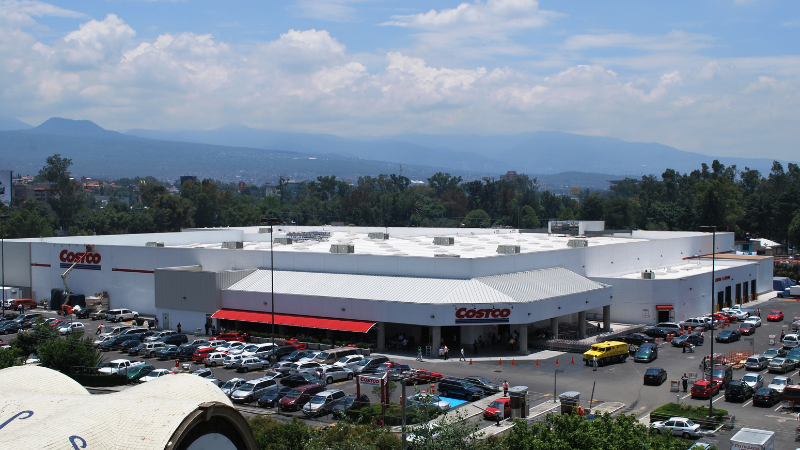
Costco has sued the Trump Administration to recover what it has paid in import duties under the White House’s protectionist tariffs should the U.S. Supreme Court rule that President Trump lacked the authority to impose the surcharges.
The retailing giant said it filed the action Friday in the U.S. Court of International Trade because federal authorities could close the books on Costco’s tariff payments to-date as early as Dec. 15. By that time, the company said, the officials will have reconciled what Costco should have paid in import duties and what it had actually remitted. Costco would learn then if it owes more money, has overpaid, or if it exactly met its obligation.
Once the amounts are reconciled, Costco’s payments are “liquidated,” or in effect diverted into federal coffers. Recovering duties deemed illegal by the Supreme Court could be difficult or impossible after the Dec. 15 reconciliation date, the company indicated in its suit.
Should the nation’s highest court rule in favor of the Administration, overturning the decisions of two lower courts, Costco would not be entitled to a rebate.
Its lawsuit asserts that the two lower courts correctly interpreted a 1977 law, the International Emergency Economic Powers Act, in ruling that President Trump lacked the authority to arbitrarily impose aggressive tariffs on nations with whom we were not at war.
The U.S. Court of International Trade, where Costco filed its suit, was one of those courts.
Costco did not reveal what it has paid to-date under the tariffs, which were imposed by President Trump to drive up the cost of imported goods and give a cost advantage to domestic producers.
The big-box operation is listed fifth on the National Retail Federation’s 2025 ranking of global retailers by sales. In addition to offering a wide array of supermarket products, the company sells a variety of ready-to-eat products and is a source of supplies for many smaller food-away-from-home businesses.
Costco is the lone plaintiff in the action filed on Friday, but hardly the only company that would be entitled to a rebate should the Supreme Court affirm that Trump’s tariffs are illegal.
The protective duties have generated $117 billion of the $195 billion the U.S. has collected to date in 2025 tariff revenues, according to the Public Broadcasting System (PBS).
U.S. Secretary of the Treasury Scott Bessent has acknowledged that money collected under Trump’s duties would have to be rebated to the parties that paid them should the tariffs be judged to be illegal.
The White House has maintained that the surcharges were paid by the nations and companies that exported goods to the U.S., not by American consumers or importers. The assertion has been widely disputed. According to a report from Goldman Sachs, U.S. consumers have picked up 67% of the fees, with exporters shouldering 22% and importers footing 8% of the charges.
The U.S. food-away-from-home industry was successful in convincing the White House several weeks ago to exempt food and beverages from the duties if the items cannot be produced in the U.S.
But the duties are still being imposed on a number of imported foodservice staples, including wines, spirits, and pastas.